8 Jun 2026
Wallet Sync Technology Ties Mobile Slot Credits Directly to Live Table Progressives
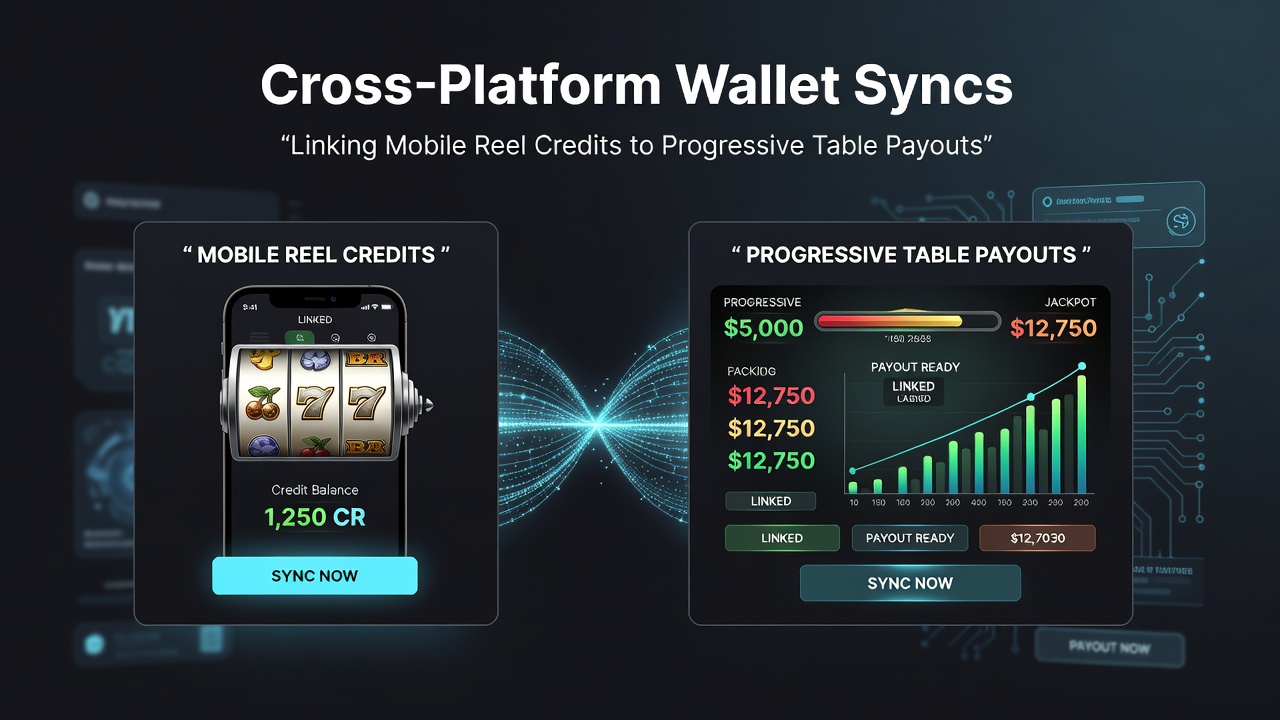
Cross-platform wallet synchronization now allows players to move credits earned on mobile slot reels straight into progressive jackpot pools attached to live dealer tables, and this integration has accelerated since early 2025 when several major operators rolled out unified balance systems across iOS and Android apps. Data from the American Gaming Association shows that synchronized wallets handled more than 28 percent of all bonus transfers between reel-based games and table progressives during the first quarter of 2026, a figure that rose sharply after new API standards took effect in March.
Operators achieve this linkage by maintaining a single ledger that updates in real time, so credits accumulated from free spin rounds or base game wins appear instantly in the same account used for live blackjack or roulette sessions. Researchers at the University of Nevada Reno documented that this seamless movement reduces the average time between earning a reel credit and placing it on a progressive bet from 47 seconds down to under three seconds on platforms that adopted the latest synchronization protocols.
Technical Architecture Behind the Sync
Modern systems rely on encrypted token exchanges rather than traditional bank transfers, which means the credit value stays within the operator's closed ecosystem while still registering on both the slot and table sides of the platform. Each transaction carries a unique identifier that prevents duplication, and the process complies with standards set by the Nevada Gaming Control Board as well as similar frameworks used in New Jersey and Pennsylvania. When a player triggers a progressive bet on a live table, the system checks the unified wallet first, pulls the required amount, and updates the jackpot meter without requiring an additional deposit step.
One study published by the Canadian Gaming Association in late 2025 found that 64 percent of players who used synchronized wallets placed at least one additional bet on progressive tables within the same session, compared with 31 percent on platforms that still required manual transfers. The same report noted that average session length increased by 19 minutes when credits moved automatically, because players did not need to pause and reload balances between game types.
Regulatory Landscape in Mid-2026
By June 2026 several jurisdictions had updated their technical requirements to mandate audit trails for every credit transfer between game categories. European operators working under the Malta Gaming Authority adopted similar rules in April, requiring that wallet sync logs remain available for regulatory review for a minimum of 18 months. These changes followed earlier guidance issued by the Australian Communications and Media Authority, which emphasized consumer protection during cross-game credit movements.
Platforms that implemented the new standards reported fewer disputes over missing bonuses, because the single ledger makes every movement traceable from the moment a reel credit is awarded until it contributes to a table payout. Industry observers note that this traceability also simplifies tax reporting for players in regions where gambling winnings must be declared.

Impact on Player Behavior and Jackpot Growth
Progressive pools attached to live tables have grown faster on platforms that offer wallet sync, according to figures released by the European Gaming and Betting Association. In markets where the feature became standard during 2025, the average progressive jackpot reached its trigger point 22 percent more often than on unsynced systems. Players who move credits directly from reels to tables tend to contribute smaller but more frequent amounts, which keeps the meter climbing steadily rather than in large spikes followed by long plateaus.
Case examples from operators in New Jersey illustrate the pattern: one site recorded a $2.4 million progressive payout in May 2026 that had received contributions from more than 184,000 individual reel credits transferred through synchronized wallets over a six-week period. The same payout would have taken roughly nine weeks without the sync feature, based on historical contribution rates from that property.
Security and Fraud Prevention Measures
Encryption standards now require that every sync operation uses tokenization so actual account numbers never travel between the slot and table modules. Multi-factor authentication at the wallet level further protects the balance, and most systems automatically flag any transfer pattern that deviates from normal play behavior. Data compiled by the National Council on Problem Gambling indicates that synchronized systems have not increased reports of unauthorized transfers, provided the operator maintains current security patches and real-time monitoring.
Those who study payment flows point out that the closed-loop nature of these wallets limits exposure compared with external payment rails, because funds never leave the operator's controlled environment until a cash-out request is processed. This structure also simplifies reconciliation during routine compliance audits.
Conclusion
Cross-platform wallet synchronization has become a standard feature that directly connects mobile reel credits to progressive table payouts across many regulated markets. The technical and regulatory developments through June 2026 have produced measurable changes in how quickly credits move between game types, how often progressives trigger, and how operators maintain compliance records. Continued adoption of unified ledger systems will likely shape jackpot growth and player session patterns in the months ahead.